How to Hang a Canvas Without Nails, and What to Know About Cribs
Maybe you rent, maybe you dislike patching holes, or maybe you just want a quick way to put up a nursery name sign. This guide covers the ways to display a canvas without a nail, how high to hang it, how to group pieces, and how to think carefully about wall art near a crib.
Check the piece and the wall first
Before you pick a method, find out what you are working with. Weigh the piece on a bathroom scale and look at the back of your own piece to see how it is set up. Different canvases have different backs, so use what you see there to choose the method.
Then look at the wall. Smooth, painted drywall is the easiest surface. Textured paint, wallpaper, brick, tile and freshly painted walls can all make adhesive products less reliable, so test a small spot first.
Adhesive strips and hooks
Adhesive picture-hanging strips and hooks are the most common no-nail choice, and they are popular with renters. Look for a product that lists the weight it can hold, and choose one that holds well above the weight of your piece. Using more strips than the minimum is a sensible habit for anything on a wall that gets bumped.
Follow the package directions closely. Clean the wall with a damp cloth and let it dry fully, since dust and oils weaken the hold. Press each strip firmly for the time stated, and wait as long as the package says before you hang the piece. Rushing this step is the usual reason strips let go.
Check the surfaces it suits, too. A strip made for smooth paint may not stay on a textured wall or on wallpaper. When it is time to take it down, follow the removal steps on the package, and pull the tab slowly and parallel to the wall to avoid taking paint with it.
Lean it instead of hanging it
The simplest method needs no adhesive at all. A canvas leans well on a dresser, a mantel, a bookshelf or a wide ledge, and it can look relaxed and personal that way. Add a small piece of non-slip pad or putty under the lower edge so it does not slide.
A narrow picture ledge shelf gives the same effect with a little more order, and it makes swapping pieces easy as a child grows. In a child's room, keep leaning art low and stable, away from edges where it could be pulled down.
Picture rails and other renter-friendly ideas
If your home has a picture rail, a band of molding near the ceiling, you can hang art from hooks that sit on it with no wall damage at all. Ask the landlord if you are not sure the rail is meant for this.
Other options include a tension rod or a hanging rail system where the rule allows, and a removable wall hook for light pieces. When in doubt, read your lease and ask. Many landlords are fine with a few small holes, and a quick message can save a deposit.
How high to hang it
A common rule is to center the art about 57 inches from the floor, which puts the middle of the piece near eye level for most adults. Measure to the center of the piece, then work out where the top edge falls so you place the hook correctly.
Over a sofa, a headboard or a console, leave a gap of roughly 6 to 10 inches above the furniture so the two read as a group. In a child's room, you may want to hang a little lower so that a seated child can see it, as long as it is out of reach of tugging hands.
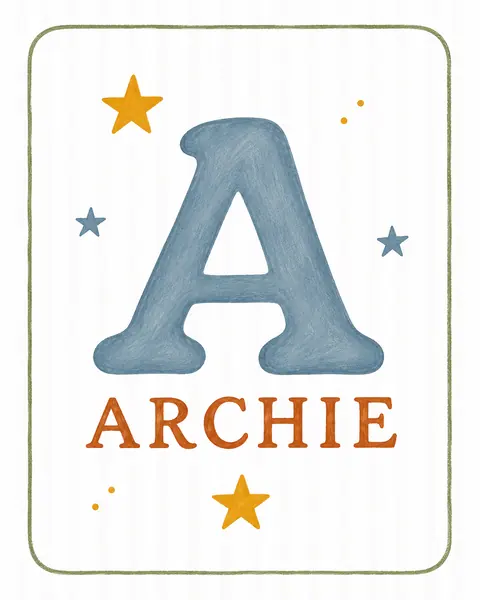
How to hang a nursery name sign
A name sign looks right centered over something: a dresser, a changing table, a chair or a shelf. Hang it so the middle sits a little above eye level, and leave the same distance on each side if it is between two windows or sits on a narrow wall.
Try a paper template first. Cut paper to the size of the piece, tape it to the wall and live with it for a day before you commit to the spot.
Is it safe to hang art above a crib?
Be careful and conservative here. Many parents choose to keep wall art off the wall directly above the crib, and putting it on another wall is the simplest way to avoid the question.
If you do hang a piece there, pick a light piece with no glass, fix it so securely that it cannot come loose, and keep it well out of reach of a standing baby, who will grow taller and more curious than you expect. Check it regularly to make sure it is still firmly in place, and keep any strings, ribbons or cords away from the crib. If you are not fully comfortable with the setup, choose another spot, and ask your child's doctor if you have questions.
Grouping pieces
A group of two or three pieces can look more finished than one alone. Keep the gaps between pieces equal, about 2 to 3 inches is typical, and treat the group as one shape when you apply the 57 inch rule.
Mix sizes, but repeat a color or a shape so the group feels related. A name sign, a small animal print and a simple initial together make a tidy nursery gallery.

Questions
Will adhesive strips damage my walls?
Used as directed on a smooth, clean surface, they usually come off without damage. Textured walls, wallpaper and fresh paint are less reliable, so test a small spot and follow the removal steps on the package.
How do I hang a canvas if I rent?
Use adhesive hooks rated for more than your piece weighs, lean it on a dresser or ledge, or use a picture rail if you have one. Check your lease if you are unsure.
How high should I hang a canvas?
A common rule centers the art about 57 inches from the floor. Over a sofa or headboard, leave a gap of roughly 6 to 10 inches above the furniture.
Is it safe to hang art above a crib?
Many parents keep art off the wall directly above the crib. If you do hang something there, choose a light piece without glass, fix it securely, keep it out of reach of a standing baby, and check it often.